

Multiple myeloma has a way of making nutrition advice contradict itself. You hear that you need more protein to keep your muscle, and then a kidney diet tells you to cut back on it. You’re told calcium protects your bones, even though your blood calcium may already be too high.
That’s why multiple myeloma diet and nutrition should be built around your own labs and your treatment. The right foods keep you strong, give you energy, support your kidneys and bones, and relieve treatment side effects.
I’m Nichole Andrews, The Oncology Dietitian™, and untangling mixed messages like these has been my job for more than 15 years. With myeloma, I see people pull dairy and bananas off their plates out of fear when many of them need to be eating MORE. Let me take that fear off your plate!
Check out my seven tips below, followed by how to eat through side effects like steroid hunger and neuropathy. You’ll also get a full day of meals and my favorite easy snacks.
Want a simple roadmap for eating well with and after cancer?
→ Grab my free 10-page guide, The Clean Scan Plan, well-loved by over 20,000 cancer survivors, for my signature 5-pillar approach to nutrition and lifestyle after a cancer diagnosis.
Why Nutrition Matters With Multiple Myeloma
Multiple myeloma is a cancer of your plasma cells, a type of white blood cell found in your bone marrow.
It reaches a lot further than your bone marrow, though. Myeloma speeds up bone breakdown, which can push your blood calcium too high, and its abnormal antibodies can harm your kidneys. It also lowers your blood counts and crowds out the healthy cells that make infection-fighting antibodies.
Treatment adds its own list, like steroid hunger, nausea, constipation, and nerve pain. And if you find yourself exhausted and moving less, you’re not alone. I will help you escape that cycle so you can protect your muscle.
That’s a lot for one body to go through, and it’s why every multiple myeloma diet I build starts with your kidney labs, your blood counts, your med list, and how this week is going. We’ll tackle it together with more clarity and fewer restrictions! Make sure to check out my VIP 1:1 Cancer Nutrition Coaching, which I talk more about below.
Multiple Myeloma Diet and Nutrition: 7 Tips From The Oncology Dietitian™
These are the seven things I go over with every myeloma client, plus my favorite multiple myeloma foods to eat.
1. Eat Enough Protein to Hold On to Your Strength
I want you eating protein every single day of treatment because it saves your muscle.
The ESPEN guidelines recommend more than 1 gram of protein per kilogram of body weight a day for people with cancer, and up to 1.5 grams when possible. For a 150-pound person (about 68 kilograms), that’s roughly 68 to 102 grams a day.
Myeloma is different from other cancers here because your kidney function can change your protein target. I ask about kidney function and dialysis before I give anyone a number, and I always look at labs before I start anyone on a high-protein diet.
Learn more about how much protein you need.
The protein foods I put on most plans:
- Salmon, tuna, chicken, and turkey
- Eggs, cooked all the way through
- Greek yogurt and cottage cheese
- Tofu, tempeh, edamame, and soy milk
- Beans and lentils
Easy win: Put protein in your breakfast, lunch, dinner, and snacks instead of cramming it all into dinner!
2. Protect Your Kidneys (Without a Strict Kidney Diet)
Myeloma is hard on your kidneys. And myeloma proteins, dehydration, high calcium, and certain medications can each strain them.
The International Myeloma Foundation (IMF) says staying well hydrated during treatment supports kidney health. Unless your care team has you on a fluid limit, sip all day and drink extra on days when you experience vomiting or diarrhea. Milk, soup, and smoothies all count, too.
One of the biggest mistakes I see is survivors cutting out bananas, potatoes, dairy, or protein because someone told them to follow a “myeloma kidney diet” when their labs never called for it.
I only recommend cutting back on sodium, potassium, phosphorus, or protein when your kidney function and bloodwork tell us to. What I can tell you honestly, though, is that most of my clients need to work on eating ENOUGH long before they need a restriction.
3. Get Calcium and Vitamin D Right (Don’t Supplement Blindly)
Calcium is a tricky one for so many of my clients. Myeloma can weaken your bones, so more calcium sounds smart, but myeloma can also send your blood calcium too HIGH, which is called hypercalcemia.
Bone-strengthening drugs like zoledronic acid and denosumab (Xgeva) can change the picture again. If you’re on denosumab, your doctor may advise calcium and vitamin D supplements so your calcium doesn’t drop too low.
Never assume more calcium is better when you have myeloma! Your labs make that call. Before I say yes or no to a calcium supplement, I look at your bloodwork, your kidney function, your oncologist’s plan, and what you eat now to make a custom plan.
My favorite calcium and vitamin D foods are milk, yogurt, fortified soy milk, calcium-set tofu, salmon, sardines, fortified cereals, and eggs. And many of my clients are SO relieved when I tell them dairy doesn’t cause cancer. So keep that Greek yogurt!
4. Eat for Healthy Blood Counts
I see anemia pretty often with my clients who have myeloma. It creates that tired, weak, out-of-breath-on-the-stairs feeling.
It usually happens because myeloma cells crowd your bone marrow, and your kidneys may not make enough of the hormone EPO, which tells your body to build red blood cells. Treatment can lower your counts too.
Your body builds red blood cells with iron, vitamin B12, and folate, so these foods can help:
- Iron: Lean beef, beans, lentils, tofu, and fortified cereals.
- Vitamin B12: Fish, eggs, dairy, and fortified foods.
- Folate: Spinach, asparagus, lentils, and avocado.
Anemia can also come from the myeloma itself or from treatment, and that kind calls for more than extra iron, so I look at your blood counts before I make recommendations just for you.
5. Fill Your Plate With Plants, Fiber, and (Yes!) Carbs
Definitely work on getting a variety of plants and colors into your diet! There are thousands of phytochemicals in plants, and each color brings a different mix that supports your body’s natural defenses.
My favorites list includes berries, citrus, broccoli, leafy greens, oats, quinoa, sweet potatoes, and beans. They bring fiber too, which helps with constipation from your meds. If you have diarrhea from treatment, we may decide to lower your fiber for a little while.
Now onto the carbs, which so many people tell me they hear myths about! Sometimes my myeloma clients tell me they’ve cut sugar, carbs, and even fruit to “starve” the cancer. And that’s a hard NO.
Sugar does not feed cancer, and your body needs carbohydrates. The experts at Memorial Sloan Kettering (MSK) say it’s a myth that avoiding carbs will starve the cancer. Your body makes its own glucose from protein and fat anyway, so you do NOT need to give up fruit.
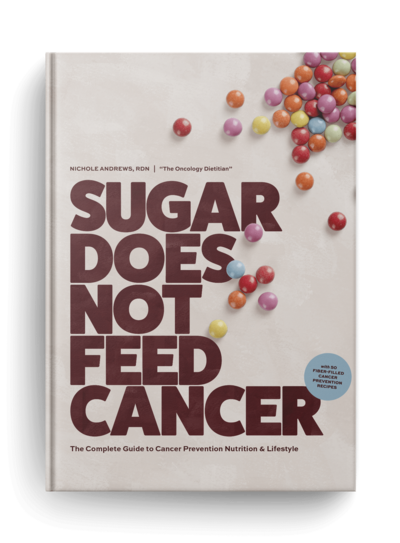
The first chapter of my book, Sugar Does Not Feed Cancer, is all about this myth. A couple of my clients call the whole book their “cancer nutrition bible!”
6. Be Careful With Multiple Myeloma Supplements
Bring me every bottle. I mean it! I want to see the calcium and vitamin D, the high-dose vitamins, the antioxidants, the herbal “immune-boosting” blend, the second multivitamin, and anything sold as a kidney cleanse.
Natural doesn’t automatically mean safe. Supplements can interact with your cancer drugs, strain your kidneys, or give you too much of one nutrient.
Green tea extract is a big one if you’re on bortezomib (Velcade). In lab and animal research, compounds in green tea blocked bortezomib’s anticancer effect. Skip the green tea pills and concentrated green tea drinks while you’re on Velcade.
Curcumin comes up a lot too, and MSK’s experts want more data before they recommend it for everyone. My full take is in my post on turmeric and cancer.
Your medical treatment is what treats the myeloma, so my approach is food first! Multiple myeloma supplements go on your plan when you have a real deficiency or a medical reason, and your oncology team sees the full list.
Read more about whether dietary supplements are safe.
7. Keep Food Safe When Your Immunity Is Low
Myeloma already affects your immune system, and cancer treatments may weaken it even more, so food poisoning is a real risk.
You still get to eat fresh food! In a 2022 review of six studies with more than 1,100 patients, strict “neutropenic diets” and regular diets had similar infection rates.
My four food safety rules:
- Wash fruits and vegetables well.
- Cook eggs, meat, poultry, and seafood all the way through.
- Choose pasteurized milk, cheese, and juice.
- Keep raw meat away from ready-to-eat food, and put leftovers in the fridge right away.
If an autologous stem cell transplant is coming up, your transplant center may give you stricter rules for a while. Follow those first! My stem cell transplant diet guide covers that whole stage.
→ Ready to stop guessing about what to eat with multiple myeloma? Let’s personalize my Custom 30-Day Cancer Healing Plan to YOU!
How to Eat Through Multiple Myeloma Treatment Side Effects
Nutrition eases side effects and helps you bounce back faster, so let’s dive into how to help you feel better!
Steroid Days: Big Appetite and Blood Sugar Swings
Steroids like dexamethasone (dex) can cause high blood sugar, a bigger appetite, and weight gain. The IMF also says to take dex with food or after meals, so dex mornings need a real breakfast.
On dex days, my approach is to pair your carbs with protein and fiber, like oatmeal with Greek yogurt or brown rice with chicken and veggies, to help keep your blood sugar steadier.
Learn more about diabetes, blood sugar, and cancer.
Fatigue, Low Appetite, and Weight Loss
Nobody dealing with cancer fatigue should be following a 15-ingredient recipe. You need just four ingredients and something frozen. Dinner can be rotisserie chicken, frozen veggies, and microwave rice, and that’s a real dinner in my book!
Life is not all about meal planning and prepping. Who wants to do that? Nobody, especially in treatment.
So eat by the clock, with a small meal or a snack every three to four hours, hungry or not.
If chewing is hard or you’re nauseous, sip one of my favorite meal replacement drinks for cancer patients.
Don’t wait out myeloma weight loss, either. If the scale keeps dropping, we can help you add calories and protein in the easiest ways we can find.
Neuropathy From Velcade or Thalidomide
Bortezomib (Velcade) can cause numbness, tingling, or even pain in the hands and feet. Thalidomide can cause painful nerve damage too.
Please hear me on this: Neuropathy can improve, and some people heal completely. Your nerves need vitamins B12, B1, B6, and D, so I check that my clients are getting enough.
Skip the high-dose “nerve support” pills, though, because too much B6 can actually CAUSE neuropathy. My post on vitamins for neuropathy from chemo lists the ones I focus on.
Inside my private VIP 1:1 Cancer Nutrition Coaching program, I look at your labs, your treatment schedule, and your symptoms, and then we build your meals around all of it. Across my clients, 85% improve their kidney markers, and 75% normalize their calcium and vitamin D.
Is There an MGUS Diet or Smoldering Myeloma Diet?
The research on an MGUS diet or smoldering myeloma diet is just getting started, and high-fiber, plant-based eating has the most exciting early results!
MGUS (monoclonal gammopathy of undetermined significance) isn’t cancer but can become cancer, and smoldering myeloma has no symptoms yet. Of course you want something you can DO while you wait.
MSK’s NUTRIVENTION trial gave 20 people with MGUS or smoldering myeloma high-fiber, plant-based meals for three months, plus six months of health coaching. They lost weight, their insulin and cholesterol markers got better, and two of them even improved their disease-progression trajectory. MSK’s experts also say MGUS or smoldering myeloma is twice as likely to progress to myeloma when your BMI is elevated.
This is early research, and MSK’s experts say larger trials are needed to confirm it. Adding more plants is a simple, low-risk step you can start right away. And remember, we’re adding, not subtracting!
One-Day Multiple Myeloma Diet Plan
I’d give this day to someone with stable kidney function and no electrolyte problems or other diet restrictions.
Breakfast: Greek Yogurt, Oats, and Blueberries
Stir these into a bowl:
- 1 cup plain Greek yogurt
- ½ cup rolled oats
- ½ cup blueberries
- 1 tablespoon chopped walnuts
Why I recommend it: Protein, calcium, and fiber, and it’s a real breakfast to take your morning dex with.
Morning Snack: Apple and Peanut Butter
Slice and dip:
- 1 medium apple
- 2 tablespoons peanut butter
Why I recommend it: It takes about 30 seconds and gives you fiber, healthy fats, and extra calories.
Lunch: Chicken and Quinoa Bowl
Build your bowl with:
- 4 ounces cooked chicken (rotisserie works!)
- ¾ cup cooked quinoa
- ½ cup cooked carrots
- ½ cup cooked zucchini
- 1 tablespoon olive oil
Why I recommend it: Chicken for your muscles, quinoa for energy, and two veggies for vitamins and minerals.
Afternoon Snack: Cottage Cheese and Strawberries
Scoop and top:
- ¾ cup cottage cheese
- ½ cup strawberries
Why I recommend it: Cottage cheese has protein and calcium, and the strawberries add vitamin C.
Dinner: Salmon, Brown Rice, and Green Beans
Plate up:
- 4 ounces cooked salmon
- ¾ cup cooked brown rice (microwave rice is fine!)
- 1 cup cooked green beans
- 1 tablespoon olive oil
Why I recommend it: Salmon gives you protein and omega-3 fats, and the rice and green beans add carbs and fiber.
If your kidneys are affected, your potassium or calcium is off, or treatment has wrecked your appetite, we’d change the foods and portions to fit you. For more ideas, try my 7-day meal plan for cancer patients.
My 7 Favorite Easy Snacks for Multiple Myeloma
My clients lean on these seven when they’re wiped out, or nothing sounds good:
- Greek yogurt and blueberries: ¾ cup yogurt with ½ cup berries for protein and calcium.
- Apple and peanut butter: One apple with 2 tablespoons of peanut butter for energy and fiber.
- Hard-boiled eggs and whole-grain crackers: Two eggs give you about 12 grams of protein.
- Cottage cheese and pineapple: ½ cup of each for protein, calcium, and vitamin C.
- Hummus and baby carrots: ¼ cup hummus with baby carrots for fiber and plant protein.
- Cheese and whole-grain toast: 1 ounce of cheese on a slice of whole-grain toast for protein, calcium, and carbs.
- Banana and walnuts: Carbs, fiber, and healthy fats with zero prep.
Snack tip: If you have kidney, potassium, or phosphorus limits, a few of these may need a swap. I have more snacks for chemo patients too.
What Foods Should You Avoid With Multiple Myeloma?
When clients ask me what foods to avoid with multiple myeloma, I name processed meats and alcohol, plus raw or undercooked foods while your immunity is low. You do NOT automatically need to give up sugar, fruit, dairy, gluten, processed foods as a whole, or soy (yes, soy is safe!).
Questions about coffee and multiple myeloma come up all the time too, and coffee doesn’t cause cancer. You don’t need to give up your morning fix!
The biggest cancer-causing foods are processed meats and alcohol, so those are the two I want you to cut out. The World Health Organization (WHO) says eating processed meat causes colorectal cancer, and the American Cancer Society says it’s best not to drink alcohol. Alcohol is an even worse fit during treatment, when dehydration, liver problems, or medication interactions are a concern.
I go deeper in my posts on processed meats and cancer, alcohol and cancer risk, and cancer foods to avoid.
Any other multiple myeloma diet restrictions depend on YOU, your labs, and where you are in treatment.
FAQs
What Is the Best Food for Multiple Myeloma?
The best food for multiple myeloma patients is a whole plate, and the foods I put on it most are eggs, Greek yogurt, salmon, beans, oats, and berries. The best diet for multiple myeloma covers your protein, plants and fiber, fluids for your kidneys, and calcium matched to your labs.
Can You Eat Bananas With Multiple Myeloma?
Yes, most people can eat bananas with myeloma! I only cut them when your blood potassium runs high, or your kidney doctor has put you on a potassium limit. If your labs are normal, eat the banana. I like it with walnuts or peanut butter as a snack.
What Kills Myeloma Cells?
Your medical treatment kills myeloma cells. People search for foods that starve multiple myeloma, but your body makes its own glucose, so keep your carbs and let treatment do that work. Food’s job is to protect your muscle, ease your side effects, and speed up your recovery.
Can You Eat Ice Cream With Multiple Myeloma?
Yes, have the ice cream! Sugar does not feed cancer, and dairy is safe. On low-appetite days or when the scale keeps dropping, a bowl is an easy way to get calories in. Buy the pasteurized, store-bought kind while your immunity is low. After all, cancer patients can enjoy dessert too!
Can Diet Reverse Multiple Myeloma?
Your nutrition can support the medical treatment for your myeloma. If you’ve been searching how to reverse multiple myeloma with food, I want you to know nutrition still does a LOT! It keeps you strong, helps protect your kidneys and bones, and gives you more energy to get through treatment.
Ready to Feel Confident About Your Multiple Myeloma Diet?
People with myeloma get told what NOT to eat all the time, but almost no one tells them what their body actually needs. That’s how you end up cutting carbs on dex days, dropping foods your kidneys never asked you to drop, and buying supplements you don’t need.
I’m Nichole Andrews, The Oncology Dietitian™, a registered dietitian with more than 15 years in cancer nutrition. I’ve helped more than 1,000 cancer survivors around the world trade food fear for a simple plan that works, and my virtual practice is taking new clients right now. 100% of my VIP 1:1 clients feel calmer and more confident after their first call with me, with more of a plan in place, fewer rules, less restriction, less overthinking, and more empowerment, hope, choices, and relief. And 80% of all my clients get clean scans!
Whether you’re newly diagnosed, in the middle of treatment, getting ready for a stem cell transplant, or years into living with myeloma, my Custom 30-Day Cancer Healing Plans and VIP 1:1 Cancer Nutrition Coaching give you a plan built around YOUR needs. I work with you personally to:
- Set your protein and calorie goals to protect your muscle and strength, with your kidneys in mind.
- Review your kidney labs and hydration so you only restrict what you truly need to.
- Support your bones and blood counts without unnecessary supplements.
- Ease nausea, constipation, diarrhea, fatigue, and appetite changes with realistic food strategies.
- Build simple meals and snacks that fit your treatment schedule and the foods you actually like.
Multiple myeloma diet and nutrition shouldn’t be one more thing you have to figure out alone. You have things you can control, I’m here for you, and this is totally doable. You’ve got this!