
When you’re searching for the best meal replacement drinks for cancer patients, it’s usually because food has gotten hard. Maybe your appetite disappeared after chemo, or you feel full after three forkfuls of dinner. A homemade meal replacement drink packs calories and protein into a few easy sips, so your body still gets the fuel it needs even when you don’t want to or can’t eat.
In this guide, I’ll walk you through 7 meal replacement drinks you can make with ingredients from any grocery store, along with who each one is best for and how to adjust it to what your body needs.
Want a simple roadmap for eating well with and after cancer? → Grab my free guide, The Clean Scan Plan, for my signature 5-pillar approach to nutrition and lifestyle.
What Are Meal Replacement Drinks for Cancer Patients?
Meal replacement drinks are shakes or smoothies with enough calories, protein, and nutrients to stand in for a meal or a substantial snack. During cancer treatment, they fill the gap on days when a full plate of food feels impossible to finish.
Most people think of store-bought options first, like Ensure, BOOST, Kate Farms, or a scoop of protein powder blended with water. Those products are convenient, but they’re built on one formula for everyone.
A homemade drink lets you tailor it to your symptoms. You can make it more calorie-dense if you’re losing weight, lower the fiber if your gut is struggling, or swap in mild flavors to reduce nausea.
Ingredients like milk, Greek yogurt, peanut butter, oats, and fruit can create a meal replacement just as nourishing as anything sold in a bottle, and you control everything that goes in.
Learn more about weight gain drinks for cancer patients.
Benefits of Meal Replacement Drinks for Cancer Patients
Cancer and its treatments can change your appetite, sense of taste, energy, and your ability to chew, swallow, or cook. On those days, drinking your nutrition is often far easier than eating a plate of food.
The National Cancer Institute recommends high-calorie, high-protein foods and drinks for patients dealing with a poor appetite or weight loss during treatment. A meal replacement drink:
- Packs calories and protein into a small amount of food when your appetite is low.
- Helps you hold onto muscle and maintain your weight through treatment.
- Requires little to no chewing, which helps when mouth sores or swallowing problems make eating painful.
Most importantly, a drink is far better than skipping a meal. Even when you can only manage half of it, you’re still giving your body the fuel it needs to get through treatment.
7 Best Meal Replacement Drinks for Cancer Patients
1. High-Calorie Peanut Butter Banana Shake
This is the meal replacement drink I recommend as The Oncology Dietitian™ when a client is losing weight and can’t eat enough at meals. Whole milk and full-fat Greek yogurt bring protein, peanut butter adds a big dose of calories in just two tablespoons, and banana and oats provide energy and a little fiber.
Blend these ingredients until smooth:
- 1 cup whole milk
- ½ cup full-fat plain Greek yogurt
- 1 medium banana (frozen for a thicker shake)
- 2 tablespoons peanut butter
- ¼ cup rolled oats
If it’s too thick, add a splash more milk.
Approximate nutrition: 630 calories | 29 g protein | 7 g fiber
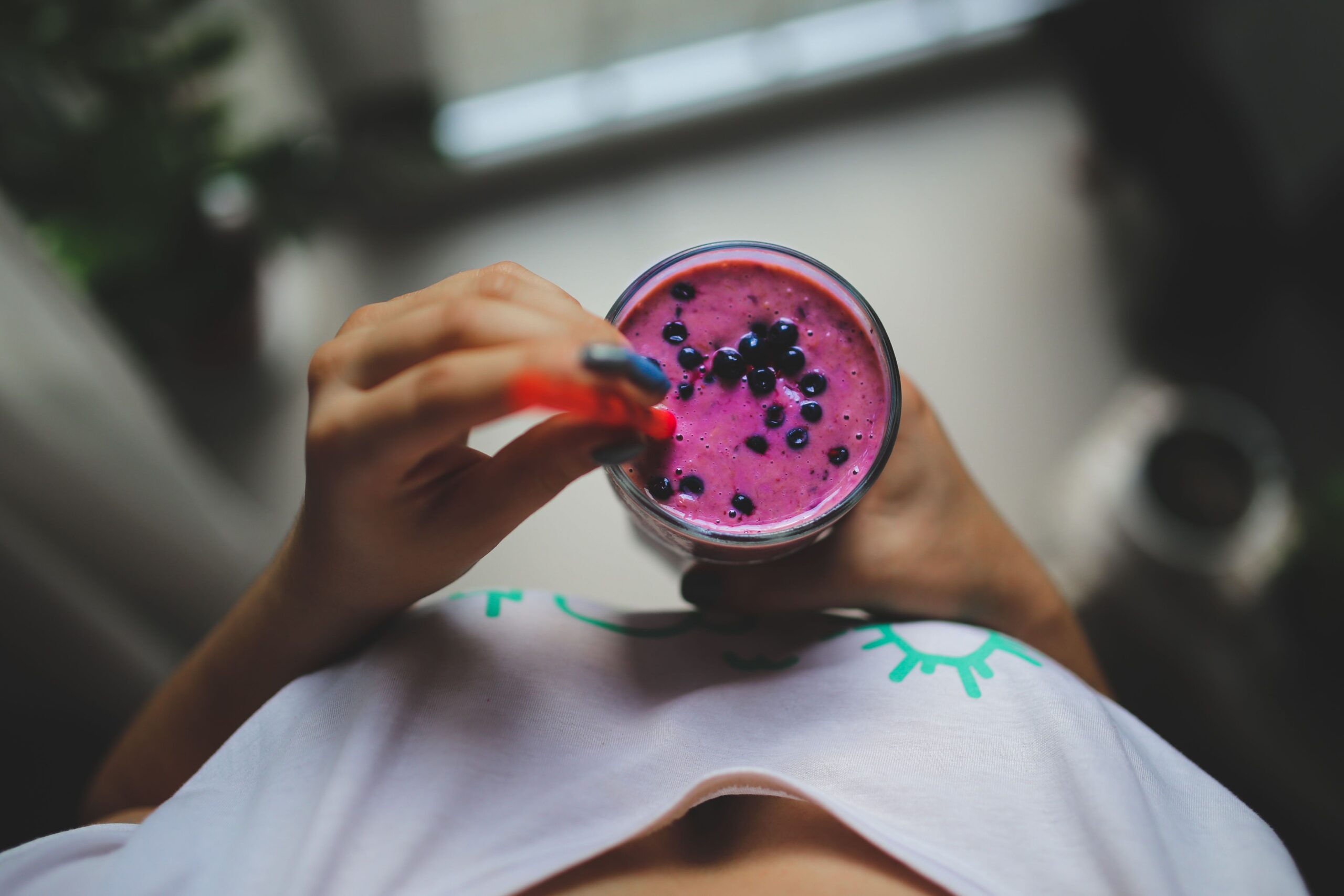
2. Berry Greek Yogurt Meal Replacement Drink
When your appetite is steady, but you want a drink that pulls double duty, this one delivers protein and fiber in the same glass. Berries add color, fiber, and plant compounds, while Greek yogurt and milk bring the protein. Ground flaxseed contributes more fiber plus ALA, a plant-based omega-3.
Blend these ingredients until smooth:
- 1 cup whole milk or fortified soy milk
- ¾ cup plain 2% Greek yogurt
- 1 cup frozen mixed berries
- ¼ cup rolled oats
- 2 tablespoons ground flaxseed
Need more calories? Add 1 tablespoon of nut butter for about 95 extra calories.
Approximate nutrition: 510 calories | 31 g protein | 11 g fiber
3. Chocolate Peanut Butter Banana Shake
Sometimes the most nutritious drink is the one you look forward to. Unsweetened cocoa turns the classic peanut butter banana combo into something that feels like dessert, while still delivering close to 30 grams of protein with no protein powder.
Blend these ingredients until smooth:
- 1 cup whole milk
- ½ cup full-fat plain Greek yogurt
- 1 medium banana
- 2 tablespoons peanut butter
- 1 tablespoon unsweetened cocoa powder
- 2 tablespoons rolled oats
Taste it before you pour, and add a drizzle of honey or maple syrup if you’d like it sweeter.
Approximate nutrition: 605 calories | 29 g protein | 8 g fiber
4. Peach and Cream High-Protein Drink
Treatment can make peanut butter taste overpowering and chocolate taste metallic. This drink keeps things gentle, with sweet peaches, creamy Greek yogurt, and a mild nut butter that adds calories. It’s a good pick for people who want something light-tasting that still counts as a meal.
Blend these ingredients until smooth:
- 1 cup whole milk
- ¾ cup plain 2% Greek yogurt
- 1 cup sliced peaches (fresh, frozen, or canned and drained)
- ¼ cup rolled oats
- 1 tablespoon almond butter
Skip the almond butter if you’d prefer an even milder flavor, which brings the drink to about 425 calories.
Approximate nutrition: 525 calories | 32 g protein | 6 g fiber
5. Strawberry Banana Soy Shake
This shake gets its protein from fortified soy milk and silken tofu, which blends so smoothly you won’t notice it’s there. Whole soy foods are safe for breast cancer survivors, and they’re an easy, affordable way to add protein to your day. Peanut butter and ground flaxseed bump up the calories and fiber.
Blend these ingredients until smooth:
- 1 cup unsweetened fortified soy milk
- ½ cup silken tofu
- 1 cup strawberries (fresh or frozen)
- 1 medium banana
- 2 tablespoons peanut or almond butter
- 1 tablespoon ground flaxseed
Use frozen strawberries or a few ice cubes if you like your shakes extra cold.
Approximate nutrition: 540 calories | 26 g protein | 11 g fiber
6. Avocado Berry Calorie-Dense Shake
If you feel full after just a few sips, volume is the enemy. Avocado solves that problem by adding a big dose of calories and healthy fats without adding much bulk. It also makes the shake incredibly creamy, and the berries and banana keep you from tasting it at all.
Blend these ingredients until smooth:
- 1 cup whole milk or fortified soy milk
- ¾ cup full-fat plain Greek yogurt
- ½ ripe avocado
- ¾ cup frozen mixed berries
- ½ medium banana
Pour it into a smaller glass and sip it slowly over 20 to 30 minutes if you fill up quickly.
Approximate nutrition: 580 calories | 26 g protein | 12 g fiber
7. Apple Cinnamon Oat Drink
After a few weeks of smoothies, flavor fatigue is common. This drink tastes like apple pie in a glass, with warm cinnamon, applesauce, and oats blended into a creamy base. It’s cozy enough for colder months and a welcome change when you can’t face another berry shake.
Blend these ingredients until smooth:
- 1 cup whole milk or fortified soy milk
- ½ cup plain 2% Greek yogurt
- ½ cup unsweetened applesauce (or ½ cup cooked, cooled apple)
- ¼ cup rolled oats
- 2 tablespoons peanut or almond butter
- ½ teaspoon cinnamon
For a smoother texture, soak the oats in the milk for 10 minutes before blending.
Approximate nutrition: 565 calories | 29 g protein | 6 g fiber
How to Build Your Own Meal Replacement Drink
Once you know the building blocks, you can turn almost anything in your fridge into a meal replacement. A good drink has four parts.
Protein
Protein helps you hold onto muscle, heal, and keep your strength through treatment.
You don’t need protein powder to get it. Greek yogurt, cottage cheese, milk, fortified soy milk, powdered milk, silken tofu, and nut butters all add protein, and they’re simple ingredients.
Calories
If you’re losing weight or barely eating, skip the “light” versions. Your body needs energy to get through treatment, and a lower-calorie drink won’t give it enough. Whole milk, full-fat Greek yogurt, nut butter, and avocado make every sip count.
Carbohydrates
Carbs are your body’s main fuel source, so there’s no reason to fear them. Sugar does not feed cancer. Every cell in your body uses glucose, and cutting carbs won’t starve cancer cells.
Banana, berries, mango, peaches, dates, and oats all add energy, and fruit adds fiber and flavor too.
Healthy Fats
Fat packs the most calories into the smallest amount of food, which helps when you fill up fast. Peanut butter, almond butter, avocado, walnuts, chia seeds, and ground flaxseed boost calories while adding nutrients and, in many cases, fiber.
How to Make Your Meal Replacement Drink Higher in Calories
When you’re losing weight, these add-ins raise calories without making your glass much bigger:
- Peanut or almond butter adds calories, protein, and healthy fat in a small spoonful.
- Whole milk gives you more calories than skim or low-fat milk, along with protein and key vitamins.
- Full-fat Greek yogurt adds both calories and protein.
- Avocado boosts calories and healthy fats with a creamy texture and almost no flavor.
- Rolled oats add calories, steady energy, and a little fiber.
- Powdered milk increases protein and calories without adding volume.
Powdered milk is my favorite grocery-store trick. Stir it into regular milk, yogurt, oatmeal, or any shake, and you get more protein and calories without having to drink more.
Working with The Oncology Dietitian™
When you work with me, you get a cancer nutrition expert who listens first and builds a custom plan for your body and goals. I run a virtual practice, I’m currently accepting new clients, and I help cancer survivors through treatment and beyond every single day.
Most of my clients come to me feeling alone. They’ve been handed a pamphlet, told to “just eat well,” or put on a long waitlist to see a hospital dietitian. But cancer is traumatic, and figuring out food by yourself during and after treatment is exhausting.
When we work together, I ask the right questions, and then reflect back what I’m seeing, where we can make progress, and what we’ll tackle first. A lot of my clients tell me they couldn’t find the words for what they were going through until we talked it out together.
Recently, a stage 4 cancer survivor reached out to me in a DM. She was struggling with sleep, low energy, and confusion about what to eat, and her hospital couldn’t get her in with a dietitian for three weeks while she felt weaker every day.
After a few messages back and forth, she wrote:
“I feel like you have heard me better than most of my oncologists on everything.”
That’s what I want every client to feel. My 1:1 coaching is a safe space to tell me what’s frustrating you. I’ll let you know what’s normal, show you what we’re going to do about it, and cheer you on while you do it.
Ready for support from an expert who gets it? Apply for my VIP 1:1 Cancer Nutrition Coaching. You can also grab my FREE guide, The Clean Scan Plan, for my signature 5-pillar approach to eating well with and after cancer.
FAQs
What If I Get Full Very Quickly?
Make your drink smaller and denser instead of bigger. A giant 24-ounce smoothie can fill you up so much that you skip your next meal. Use nut butter, whole milk, full-fat Greek yogurt, powdered milk, or avocado to pack more nutrition into fewer sips, and drink it slowly.
What If I Have Nausea?
Keep portions small, sip slowly, and serve your drink cold. Choose mild flavors and ingredients you’re tolerating right now. If liquids fill you up, drink them between meals instead of with them.
What If I Have Mouth Sores?
Shakes are a great option because they’re soft and need no chewing. Blend until completely smooth, serve cool, and stick with low-acid fruits like banana, peaches, mango, and melon. Citrus, pineapple, and strawberries can sting, so limit them until your mouth heals.
What If I Have Diarrhea or Constipation?
Adjust the fiber. With diarrhea, leave out chia, flax, oats, and large amounts of fruit for now, and keep the drink simple. With constipation, add oats, berries, chia, or ground flax, and drink plenty of fluids.
What If I Don’t Like Creamy Drinks?
Don’t force yourself to drink something you hate. Try lighter blends made with frozen fruit, ice, water, or coconut water, with a small scoop of yogurt for protein. These drinks have fewer calories and less protein, so you’ll need to make up the difference with other foods during the day.
When Should I Worry About Weight Loss During Treatment?
If you’re losing weight during cancer treatment, it often means you’re not getting enough calories and protein, and you may be losing muscle and strength along with it. Tell your care team if you notice rapid weight loss, loose-fitting clothes, a big drop in appetite, weakness, trouble swallowing, ongoing vomiting or diarrhea, or trouble staying hydrated. The National Cancer Institute recommends talking with your team about eating problems and weight loss and asking about a referral to a registered dietitian.
Need Help Figuring Out What YOU Should Eat During Cancer Treatment?
You can find a thousand smoothie recipes online, but Google can’t tell you how many calories or how much protein you need, what your labs mean, whether your supplements are safe, or how to change your meals when nausea flares up.
I’m Nichole Andrews, The Oncology Dietitian™, a registered dietitian with more than 15 years in cancer nutrition. In my 90-Day VIP 1:1 Cancer Nutrition Coaching, I work with you personally to:
- Build a nutrition and lifestyle plan around your cancer, treatment, and body.
- Review your meals, labs, supplements, and oncology notes.
- Protect your strength, energy, and muscle through treatment.
- Adjust your plan as side effects come and go.
- Build habits for long-term cancer prevention once treatment ends.
Let’s build a plan and help you take care of your body in the best way possible.