
Most women searching for a 7-day meal plan for breast cancer patients have already been handed a pile of conflicting food rules from the internet and an unhelpful handout at the hospital. So every meal starts to feel like a test. Did that bowl of pasta help or hurt? Is the soy latte a mistake? Should you be eating less, or more, or nothing that tastes good ever again?
As The Oncology Dietitian™, I want you to know that food makes an enormous difference after a breast cancer diagnosis, and the answer is never a longer list of foods to avoid.
I created this 7-day meal plan to show you what an evidence-based week of eating looks like. You’ll get seven days of meals and approximate protein and fiber totals for every day. I’ll also teach you how to build your own meal plan so you can stop guessing and start eating with confidence.
Want done-for-you cancer prevention menus, grocery lists, and food guides organized by your stage of treatment? → Get instant access to The Cancer Healing Vault™.
Nutrition for Breast Cancer Patients: Why What You Eat Makes a Difference
No food, supplement, or diet can promise that breast cancer will disappear or won’t come back. At the same time, too many women leave their oncology appointments believing food doesn’t make a difference, so they either give up on nutrition or spiral into restriction.
The research tells a far more hopeful story.
The World Cancer Research Fund’s evidence review on breast cancer survivors found links between diet, physical activity, and body composition and how women do after a diagnosis. Other studies point to specific foods that belong on your plate:
- Every additional 10 grams of fiber per day was associated with a 13% lower risk of death from any cause after a breast cancer diagnosis, according to the WCRF review.
- In a study of 3,081 women treated for early-stage breast cancer, those who ate the most EPA and DHA omega-3s from food had about a 25% lower risk of additional breast cancer events.
- A meta-analysis of 11,206 breast cancer survivors linked eating soy after diagnosis with about 15% lower all-cause mortality and 21% lower recurrence.
These are observational studies, which means they show associations rather than proof that one food caused the result. Still, they all point in the same direction. Your everyday eating habits are one of the things you can influence after cancer, and food is an incredibly powerful tool.
7-Day Meal Plan for Breast Cancer Patients
In this plan, each day aims for 30 or more grams of fiber when tolerated, includes protein at every meal and snack, and works omega-3-rich foods and whole soy foods into the week.
You can adjust portions to your appetite, weight goals, and how you feel that day. I didn’t assign a calorie level because calorie needs during and after cancer treatment vary too much from person to person.
Day 1
- Breakfast: Oatmeal with blueberries, walnuts, ground flaxseed, and Greek yogurt
- Snack: Apple with peanut butter
- Lunch: Lentil quinoa bowl with spinach, tomatoes, and tahini
- Snack: Greek yogurt with berries
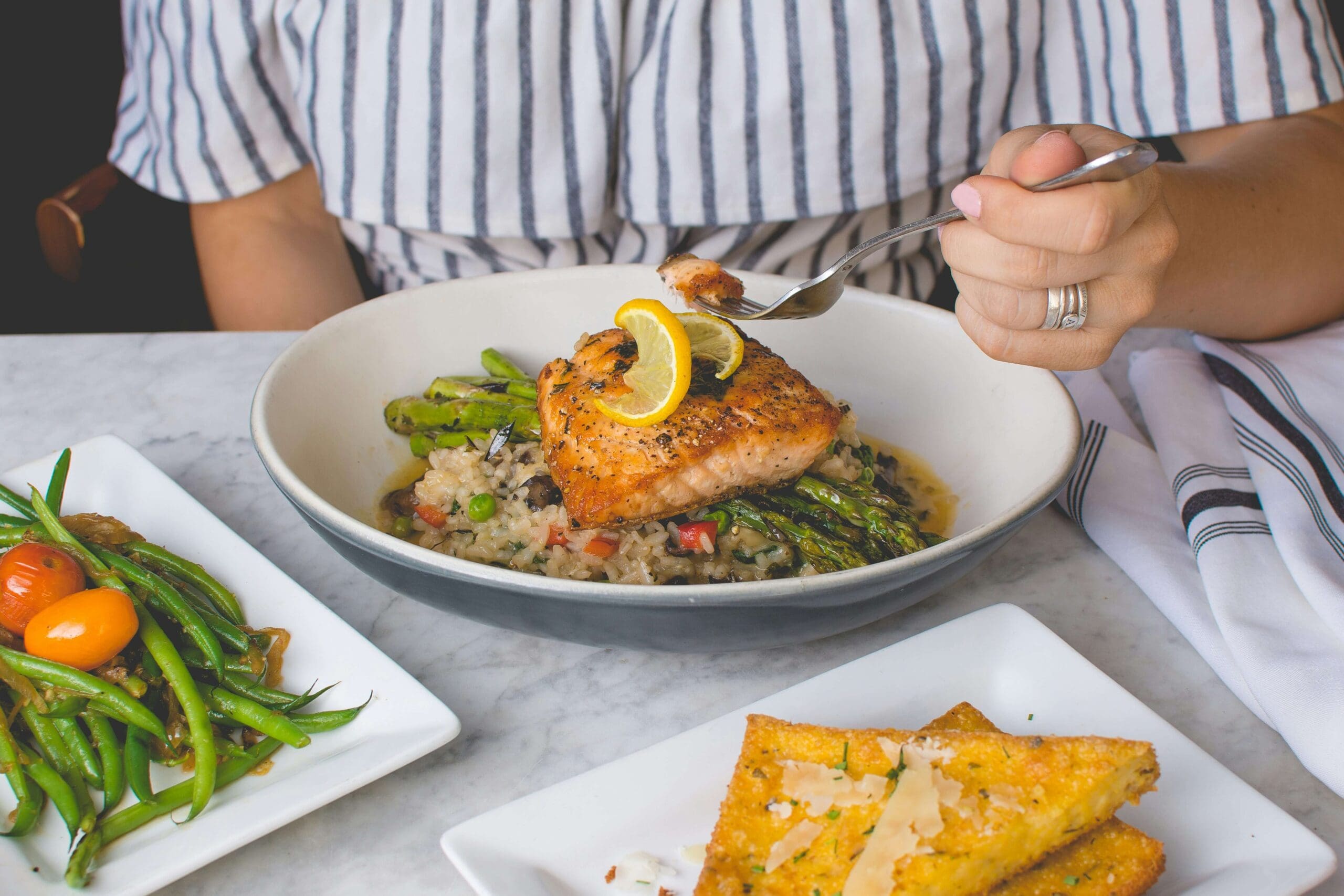
- Dinner: Baked salmon with roasted broccoli and sweet potato
Oats, lentils, berries, and broccoli stack up fiber from four different sources. Salmon brings EPA and DHA, the omega-3s tied to better breast cancer outcomes in research, and walnuts and flax add the plant-based omega-3 ALA. Greek yogurt at breakfast and as a snack gives you a protein boost.
Approximate protein: 75 g | Approximate fiber: 35 g | Fruit and vegetable servings: 6
Day 2
- Breakfast: Whole-grain toast with eggs, avocado, and berries
- Snack: Greek yogurt with chia seeds
- Lunch: Chicken and avocado whole-grain wrap with crunchy vegetables
- Snack: Hummus with carrots and whole-grain crackers
- Dinner: Tofu vegetable stir-fry with brown rice and edamame
Despite what you may have been told, whole soy foods like tofu and edamame are completely safe with breast cancer and pack plenty of protein and fiber into one meal. Whole-grain bread, brown rice, and hummus round out Day 2’s fiber, and chia seeds slip a little extra ALA omega-3 into your afternoon snack. Avocado appears twice for healthy fats and makes every meal more satisfying.
Approximate protein: 70 g | Approximate fiber: 32 g | Fruit and vegetable servings: 5
Day 3
- Breakfast: Greek yogurt with oats, berries, and ground flaxseed
- Snack: Banana with peanut butter
- Lunch: Chickpea quinoa bowl with colorful vegetables and tahini
- Snack: Cheese with a pear
- Dinner: Chicken with sweet potato and Brussels sprouts
Chickpeas and quinoa team up at lunch for a fiber and protein combo that keeps you full. Pears rank among the highest-fiber fruits, and pairing one with cheese adds protein and calcium to your afternoon. Brussels sprouts and sweet potato finish the day with even more fiber and color.
Approximate protein: 70 g | Approximate fiber: 36 g | Fruit and vegetable servings: 6
Day 4
- Breakfast: Overnight oats made with fortified soy milk, berries, and walnuts
- Snack: Hard-boiled egg with fruit
- Lunch: Roasted turkey or tofu sandwich on whole-grain bread with vegetable soup
- Snack: Greek yogurt with berries
- Dinner: Whole-wheat pasta with tomato sauce, white beans, and spinach
Fortified soy milk works soy into your morning and adds protein and calcium to your oats. Pasta is on the menu because carbs are not the enemy, and tossing white beans and spinach into your sauce turns a comfort meal into a fiber-rich dinner. For the sandwich, choose home-roasted turkey breast or tofu over processed deli meat (which raises your colon cancer risk).
Approximate protein: 70 g | Approximate fiber: 35 g | Fruit and vegetable servings: 5
Day 5
- Breakfast: Eggs with whole-grain toast, berries, and avocado
- Snack: Cottage cheese with peaches
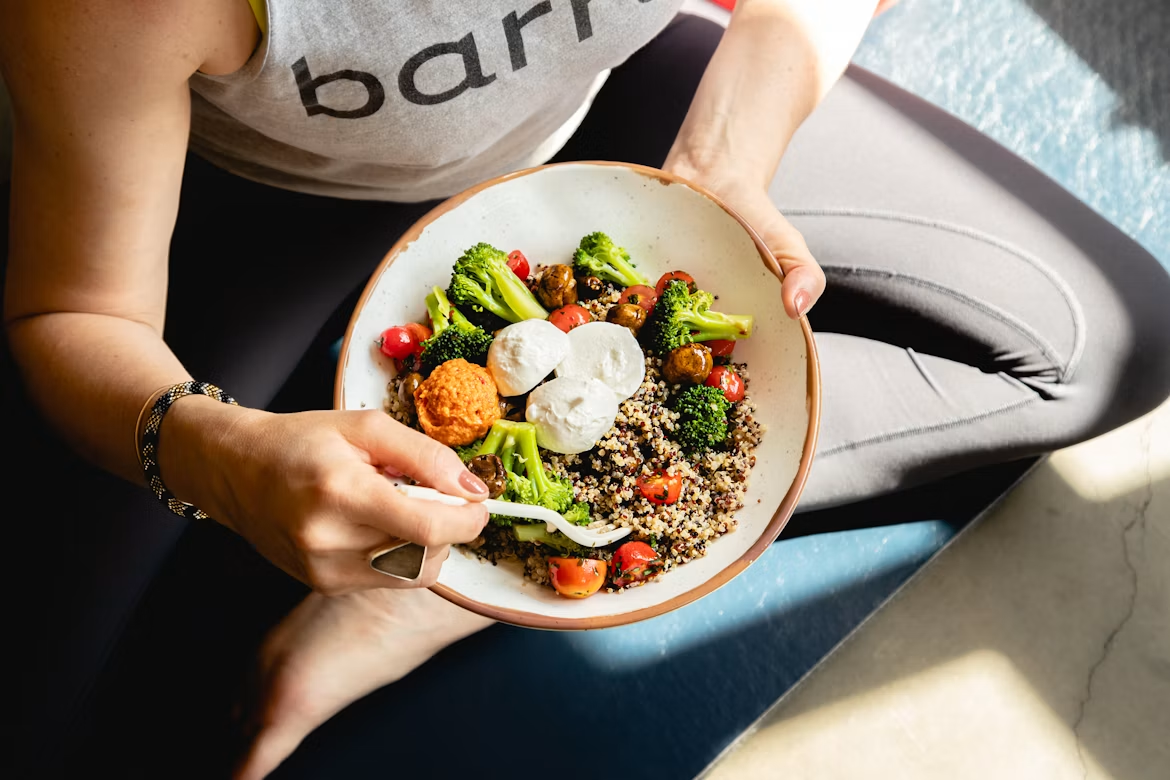
- Lunch: Salmon grain bowl with greens, quinoa, avocado, and colorful vegetables
- Snack: Walnuts with fruit
- Dinner: Black bean tacos with cabbage, salsa, and avocado
Two servings of fatty fish per week is an easy way to get EPA and DHA from food, and the salmon bowl checks that box. Black beans bring the fiber at dinner, while cabbage and salsa add crunch and extra vegetables to your tacos. Cottage cheese is one of the most protein-dense snacks you can grab, and peaches keep it fresh.
Approximate protein: 80 g | Approximate fiber: 34 g | Fruit and vegetable servings: 6
Day 6
- Breakfast: Oatmeal with banana, peanut butter, and chia seeds
- Snack: Greek yogurt with berries
- Lunch: Chicken quinoa bowl with roasted vegetables
- Snack: Hummus with whole-grain pita and vegetables
- Dinner: Baked trout with brown rice, asparagus, and a side salad
Trout is another fatty fish rich in EPA and DHA, and it’s often milder and more budget-friendly than salmon. Oats and chia seeds start your day with soluble fiber, and hummus with whole-grain pita turns a simple snack into a fiber boost. Chicken at lunch and Greek yogurt as a snack keep protein steady between meals.
Approximate protein: 75 g | Approximate fiber: 34 g | Fruit and vegetable servings: 6
Day 7
- Breakfast: Whole-grain waffles with Greek yogurt, berries, and nut butter
- Snack: Apple with cheese
- Lunch: Lentil quinoa bowl with roasted vegetables and greens
- Snack: Edamame
- Dinner: Tofu sheet-pan dinner with potatoes, broccoli, and colorful vegetables
Topping whole-grain waffles with Greek yogurt and nut butter turns a weekend treat into a balanced breakfast with protein and healthy fat. Lentils, edamame, and tofu give you three plant proteins in one day, along with plenty of fiber. Potatoes deserve a spot on your plate too, especially roasted alongside broccoli and other vegetables.
Approximate protein: 70 g | Approximate fiber: 37 g | Fruit and vegetable servings: 6
How to Build Your Own Meal Plan as a Breast Cancer Patient
A meal plan is a great starting point, but you won’t eat the same seven days forever. Once you know which elements to build around, you can create your own meals without needing a plan.
These are the elements I want you to work into your week as The Oncology Dietitian™:
- Fiber: Aim for around 30 grams a day from beans, lentils, whole grains, fruit, vegetables, nuts, and seeds when your body tolerates it.
- Omega-3s: Eat fatty fish like salmon, trout, or sardines about twice a week for a healthy boost of EPA and DHA.
- Plant omega-3s: Sprinkle walnuts, chia seeds, and ground flaxseed into meals for ALA, a different type of omega-3 than the EPA and DHA found in fish.
- Protein: Include a protein source at every meal and snack to protect your muscle and help your body repair.
- Soy foods: Work tofu, tempeh, edamame, or soy milk into your week as an affordable plant protein with research supporting its safety after breast cancer.
- Plant variety: Rotate the colors and types of fruits, vegetables, grains, and legumes you buy so you get a wider range of nutrients and plant compounds.
- Healthy fats: Use olive oil, avocado, nuts, and seeds to make meals more satisfying and add calories when your appetite is low.
When you sit down to plan a meal, walk through these four steps:
- Start with a protein, like fish, chicken, eggs, tofu, Greek yogurt, beans, or lentils.
- Fill about two-thirds of your plate with plant foods, mixing vegetables or fruit with a whole grain or starchy vegetable.
- Add a healthy fat, such as a drizzle of olive oil, a few slices of avocado, or a handful of nuts.
- Look for a fiber anchor, like beans, lentils, oats, berries, or a whole grain, and add one if your plate is missing it.
Take any meal through these steps, and you’ll be close to the balance you see in the 7-day plan. For example, a tuna sandwich becomes tuna on whole-grain bread with a side of fruit and crunchy vegetables. A frozen pizza night becomes pizza plus a big salad with chickpeas.
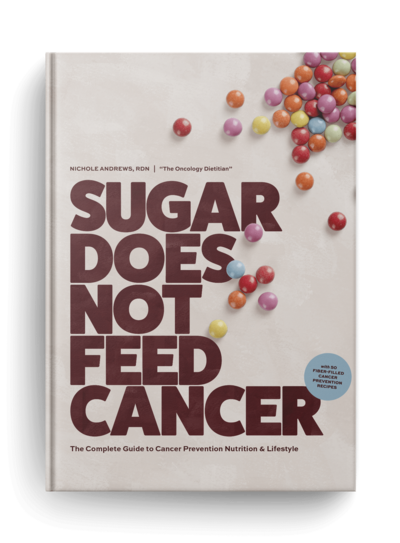
A healthy eating pattern also includes birthday cake, ice cream with your kids on a summer night, and the occasional bag of chips at a movie. Sugar does not feed cancer, and the stress of treating every treat like a threat does more damage to your quality of life than a cookie.
When most of your week is focused on plants, protein, and whole foods, there’s plenty of space for the foods you love. Enjoy them without guilt.
FAQs
Is Soy Safe for Breast Cancer Survivors?
Yes. Whole soy foods like tofu, tempeh, edamame, and soy milk are safe during and after breast cancer, including estrogen receptor-positive breast cancer. A meta-analysis of 11,206 breast cancer survivors linked eating soy after diagnosis with a lower risk of recurrence, so there’s no need to cut it from your plate. Soy is also one of the most affordable ways to add protein and fiber to your meals.
Should I Take Fish Oil Supplements?
Food always comes first. In a study of 3,081 breast cancer survivors, the omega-3s linked to fewer additional breast cancer events came from food, while fish oil supplements didn’t show the same benefit. Aim for salmon, trout, sardines, or other fatty fish about twice a week, and talk with your care team before starting any supplement.
What Are the Best Foods for Breast Cancer Patients?
No single food prevents breast cancer recurrence, so the best approach is a pattern that prioritizes variety. Fill about two-thirds of your plate with plant foods like vegetables, fruit, whole grains, beans, and lentils, then add a protein at every meal, fatty fish twice a week, and soy foods a few times a week. Limit alcohol and processed meats, and leave room for the foods you enjoy, like dessert.
Get More Breast Cancer Nutrition Support from The Oncology Dietitian™
I’m Nichole Andrews, The Oncology Dietitian™. I’m a registered dietitian with more than 15 years in cancer nutrition, and I’ve coached over 1,000 survivors one-on-one. In my work, I translate oncology nutrition research into clear, practical guidance so you can eat with confidence instead of fear.
I created The Cancer Healing Vault™ for survivors who want my expert guidance on their own schedule. It’s a self-paced system built on my NED Method™ and organized into three paths:
- Path One is for women who are newly diagnosed, in active treatment, or living with stage IV cancer.
- Path Two supports you in the first six months after finishing treatment as you rebuild and work to lower your recurrence risk.
- Path Three helps you protect your long-term health once you’re six or more months past treatment.
Inside, you’ll find done-for-you cancer prevention menus, grocery lists, trackers, and hand-picked masterclasses, all with lifetime access. It’s also HSA- and FSA-eligible.
→ Get instant access to The Cancer Healing Vault™ and start eating with confidence today.