
Nobody warns you about this part. You finish the degree, nail the internship, pass the CDR exam, and then land a job that barely covers your student loans.
Meanwhile, a fitness influencer with zero credentials charges three times your rate and sells out in a day. Something about that math does not add up. It is not a talent or knowledge problem.
It is a business problem that no one in dietetics school ever talked about. The gap between being a good dietitian and being a profitable dietitian has nothing to do with how much you care and everything to do with how you position, package, and price what you already know.
Build Like a CEO
If you are tired of being the best-kept secret in dietetics, it is time for a change. My RD CEO 1:1 Coaching helps dietitians like you get clear on your offer, raise your rates, and start attracting clients who are ready to invest.
Apply for RD CEO 1:1 Coaching →
Your Training Made You Competent, Not Profitable
Dietetics programs teach you biochemistry, medical nutrition therapy, food science, and clinical care. They prepare you to pass the CDR exam and earn the Registered Dietitian Nutritionist (RDN) credential. What they do not teach you is how to run a business.
Here is what I have seen working with RDs inside my RD CEO coaching: the most clinically brilliant dietitians are often the most underpaid.
Not because they lack value, but because they were trained to follow protocols, not to lead people to a decision. I know this firsthand.
I spent over 10 years in clinical care before I left the system in 2019 to build what did not exist.
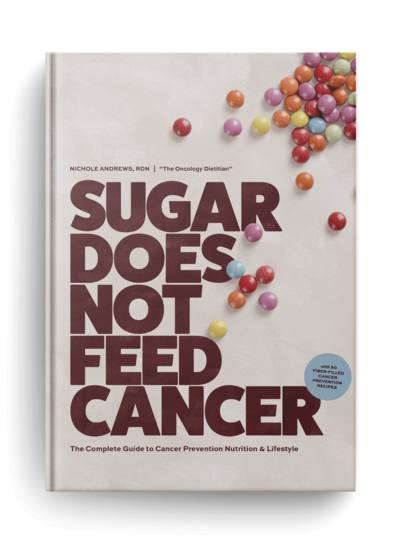
Today I run a nationally recognized practice, a bestselling book, multiple programs serving thousands of cancer survivors, and a coaching arm that helps other RDs do the same thing.
None of that happened because I got another certification. It happened because I learned business.
Business does not reward the most credentialed or the most generous. It rewards clarity, positioning, and the ability to communicate your value.
That means:
- Naming a specific problem you solve instead of offering “general nutrition counseling”
- Packaging a solution people are ready to pay for, not just hourly sessions
- Pricing in alignment with your value, not what feels “safe” or what your colleague charges
- Showing up like someone who knows how to help, not someone who is hoping to be picked
The numbers tell the story. 64% of new nutrition professionals cite uncertainty around how to start seeing clients as their biggest obstacle.
More than half admit they delayed launching their practice due to a lack of confidence or clear structure. The knowledge is there. The business skills are not.
The Real Cost of Staying in “Good RD” Mode
Staying stuck as a good dietitian who undercharges comes with a price that goes far beyond your bank account.
Research shows a burnout rate above 40% among dietitians, with clinical nutrition managers reporting higher turnover between 2022 and 2023.
Dietitians are leaving hospitals and clinical settings at record rates, and new RDs with less than 3 years of experience are exiting the profession faster than ever.
Here are the signs you are stuck:
- You feel the need to explain or justify your prices every time someone asks
- You give away more than you are paid for because you feel guilty charging for your expertise
- You leave sessions tired instead of energized because you are overdelivering and under-earning
- You keep adding credentials thinking one more certification will finally make you feel “ready”
- You look at what other RDs charge and price yourself lower to feel competitive
If any of that resonates, you do not need more credentials. You need structure, mentorship, and a clear path to build a dietitian private practice that reflects the quality of your work.
I built The Oncology Dietitian from a clinical career into a multi-platform brand with a bestselling book, national media presence, and programs that serve thousands.
The business side was the steepest learning curve of my career. That is exactly why I now coach other RDs through it.
The Impostor Syndrome Trap
Impostor syndrome affects an estimated 80% of high achievers, and dietitians are no exception.
A cross-sectional survey of 5,000 RDs credentialed by the Commission on Dietetic Registration confirmed that impostor phenomenon is widespread across the profession, regardless of education level or years of experience.
For dietitians, it shows up in very specific ways:
- Charging less than you are worth because you feel like you “have not been doing this long enough”
- Offering too many sliding scale spots until your practice is no longer profitable
- Giving away free advice because asking for payment feels uncomfortable
- Hesitating to call yourself an expert even though you have the credentials, the experience, and the results to prove it
Here is what I tell my coaching clients: if impostor syndrome is holding you back, everybody loses. Your clients lose access to the expert they need. Your family loses the income you deserve. And you lose the career you worked so hard to build.
I watch RDs break through this every single month inside my coaching. The shift is not about becoming a different person. It is about finally owning who you already are.
How to Start Building Like a CEO
Moving from good dietitian to profitable dietitian does not require a personality transplant. It requires a strategy. Here is the framework I use inside my RD CEO coaching:
Step 1: Get Clear on Your Niche
Stop trying to be everything to everyone. Pick the population you are most passionate about serving and go deep.
Whether it is oncology, pediatrics, sports nutrition, gut health, or eating disorders, your niche is what makes you referable and recognizable.
Step 2: Build a Signature Offer
Stop selling sessions. Start selling outcomes. Package your expertise into a program that takes clients from where they are to where they want to be.
Give it a name, a timeline, and a clear promise. This is what positions you as a specialist, not a commodity.
Step 3: Price for Profitability
Calculate your true hourly rate, including all the unpaid hours of prep, admin, and follow-up. Then set your prices based on the value of the transformation you deliver, not the number of minutes you spend on a call.
Step 4: Show Up as the Authority
Your online presence is your storefront. Invest in a professional website, share content that demonstrates your expertise, and stop hiding behind your credentials. People hire people they trust. And trust comes from visibility, consistency, and confidence.
Step 5: Get Mentorship
You do not have to figure this out alone. Every successful business owner has a mentor or coach who helps them see what they cannot see on their own. That is exactly what my RD CEO 1:1 Coaching provides: a clear path, direct guidance, and the accountability to actually follow through.
You Are Not Just a Good Dietitian
You are the CEO of a business that has the potential to create real, lasting change for your clients and for yourself.
The skills you already have are enough. What you need now is the structure, strategy, and support to turn those skills into a business that pays you what you are worth.
If you are ready to stop undercharging and start building like a CEO, I would love to help you get there.
Stop Undercharging. Start Building.
My RD CEO 1:1 Coaching is for dietitians who are done guessing and ready to get the results they deserve. We will build your offer, set your pricing, and create a business that attracts aligned, high-commitment clients. You already have the skills. Let me help you build the business.